
Hard People, Holy Responses
#LoveLikeJesus
Hard People, Holy Responses
Leader: Patsy Sassano III
Study Objective: This workshop will give you tools for situations where you are dealing with someone who is angry, critical, demanding, or disrespectful.
Leader’s Note:
Welcome to Hard People, Holy Responses.
We’re talking about something every person in ministry encounters: difficult people.
We’re going to explore how to respond to anger, criticism, demands, and disrespect with biblical wisdom, emotional intelligence, and Christ-centered boundaries.
Here’s the big idea I want you to remember throughout this workshop:
You cannot control what someone brings into the room, but through the Holy Spirit, you can control what you bring back into it.
My goal is for you to leave knowing what to do the next time someone is angry, critical, demanding, or disrespectful.
Because it’s one thing to talk about responding like Jesus when everyone is calm. It’s another thing when someone is upset and you’re trying not to make the situation worse.
Let’s talk about that.

It’s All About People
Ministry would be what if it weren’t for people?
Would it be easy? Impossible? Boring?
The truth is, ministry wouldn’t be ministry without people. People are why we preach, teach, serve, lead, and sacrifice.
But people are also why ministry can be exhausting.
Every ministry has challenging moments, and every ministry has challenging people.
Have you ever had somebody say something to you in ministry that took thirty seconds to hear but three days to get over?
Maybe somebody criticized a sermon, questioned a decision, misunderstood your intentions, or spoke to you disrespectfully.
The conversation ended, but you kept replaying it in your mind.
You thought about what you should have said. You wondered whether they were right. You imagined having the conversation again with all the perfect responses you couldn’t come up with in the moment.
I want you to think of two difficult interactions you’ve experienced in ministry. Briefly write down what happened in each situation, without including anyone’s name.
We’re not doing this to criticize people. We’re doing it to recognize how difficult interactions affect us and how we can respond differently.
Remember this: Don’t let a few difficult people steal your joy in serving people.
But how do we keep difficult interactions from getting inside us and affecting the way we treat everyone else?

Analogy = Rocks Out
Imagine that you are a bucket filled with water.
The bucket represents you. The water represents the life-giving things in your life and ministry: encouragement, meaningful relationships, the people who appreciate you, and the joy of serving others.
Now imagine that every difficult interaction places a rock inside that bucket.
- Someone criticizes you. There’s a rock.
- Someone questions your motives. Another rock.
- Someone speaks disrespectfully or makes an unreasonable demand. Another rock.
Over time, those rocks accumulate.
What’s your solution for getting them out?
One option is to put a lid on the bucket. You withdraw, isolate yourself, and stop letting people get close. But closing yourself off from difficult people can also close you off from healthy relationships.
Another option is to dump out the bucket. You become emotionally numb and stop allowing yourself to care so much. But there’s a difference between healthy boundaries and losing your empathy.
The third option is to wait for time to fix everything. Sometimes time helps, but it doesn’t automatically resolve resentment or change unhealthy patterns.
What if the goal isn’t simply to remove the rocks, but to learn how to repurpose them?
Difficult interactions can become opportunities for growth. Criticism can teach discernment. Frustration can teach patience. Conflict can reveal our insecurities and show us where we need healthier boundaries.
That doesn’t mean hurtful behavior is acceptable. It means we don’t have to let difficult experiences become destructive.
So here’s our central question:
How do I respond like Jesus when somebody else isn’t acting like Jesus?
Reacting vs. Responding
Scripture has a great deal to say about anger.
James 1:19–20 teaches us:
“Let every person be quick to hear, slow to speak, slow to anger.”
Ephesians 4:26 says:
“In your anger do not sin.”
The question isn’t whether we ever experience anger. The question is what we do with it.
Sometimes anger is the result of another emotion. We feel betrayed, hurt, ignored, embarrassed, or disappointed, and that emotion eventually becomes anger.
So when you become defensive, ask yourself: Was anger really the first thing I felt? Or was I hurt, embarrassed, or afraid of being misunderstood?
Understanding the emotion underneath our anger helps us respond to the actual issue rather than simply reacting to the feeling.
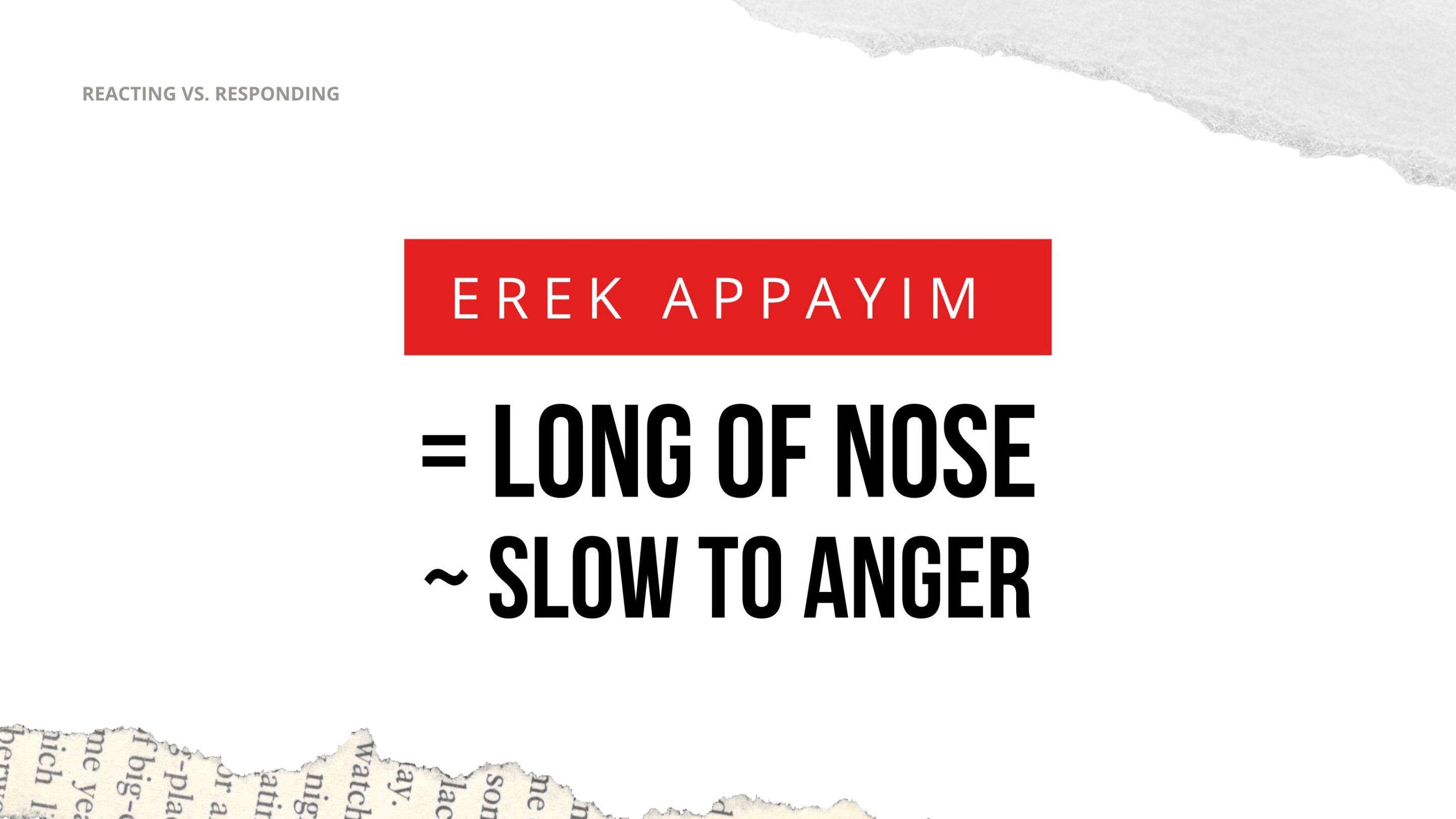
There’s an interesting Hebrew expression, erek appayim, commonly translated as “slow to anger.” Literally, it conveys the idea of being “long of nose,” an idiom describing patience.
When Scripture describes God as slow to anger, it reminds us that He is patient and gives people time to respond to His gracious warnings.
2 Peter 3:9 explains:
“The Lord is not slow in keeping his promise, as some understand slowness. Instead he is patient with you, not wanting anyone to perish, but everyone to come to repentance.”
God’s patience is connected to His desire for people to have the opportunity to respond to Him.
We often want God to be patient with us while expecting everyone else to get things right immediately.
We want grace when we make mistakes, but struggle to offer grace when someone frustrates us.
Let’s learn to become better at being slow to anger.
A Healthy Response Pattern
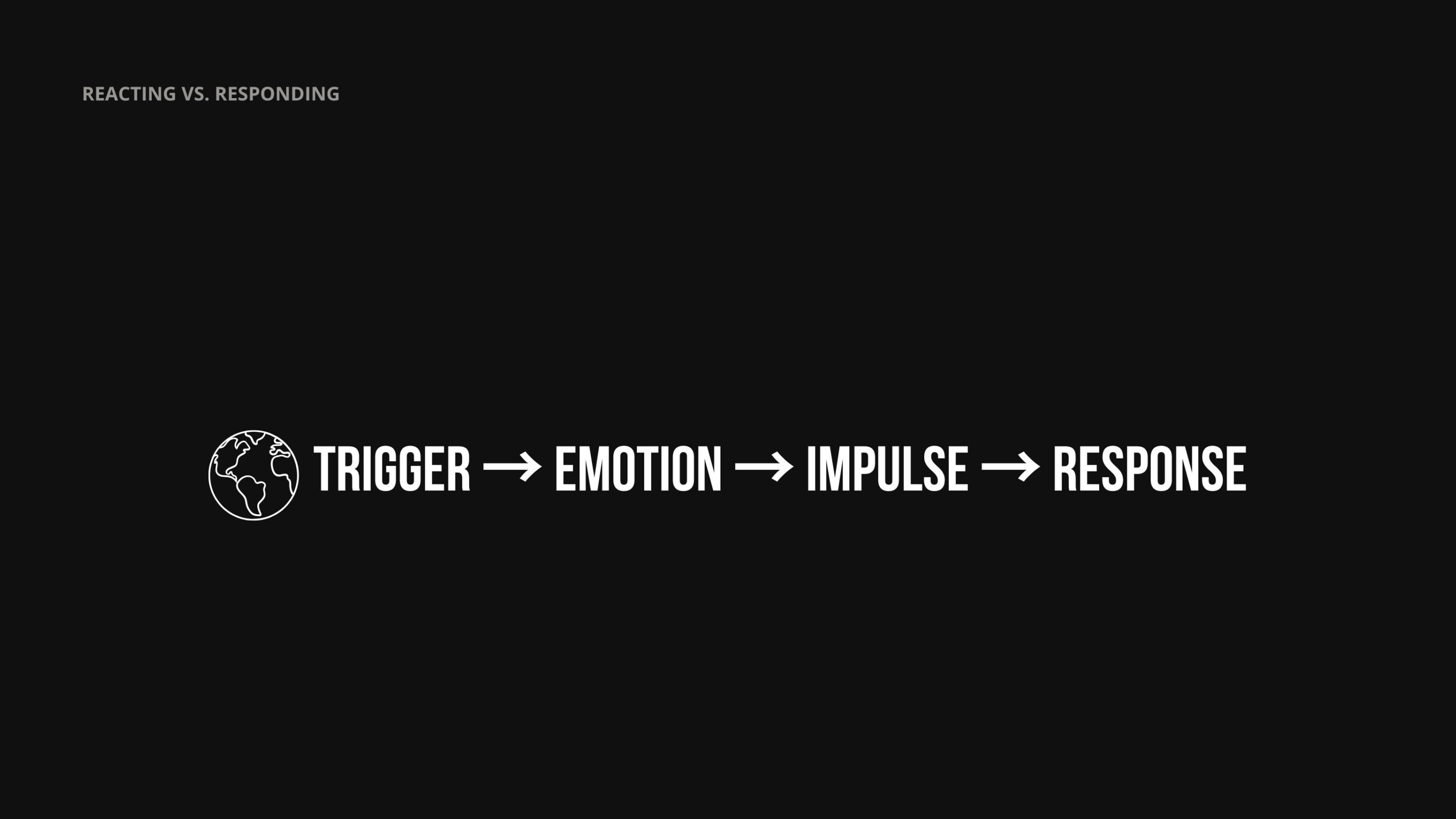
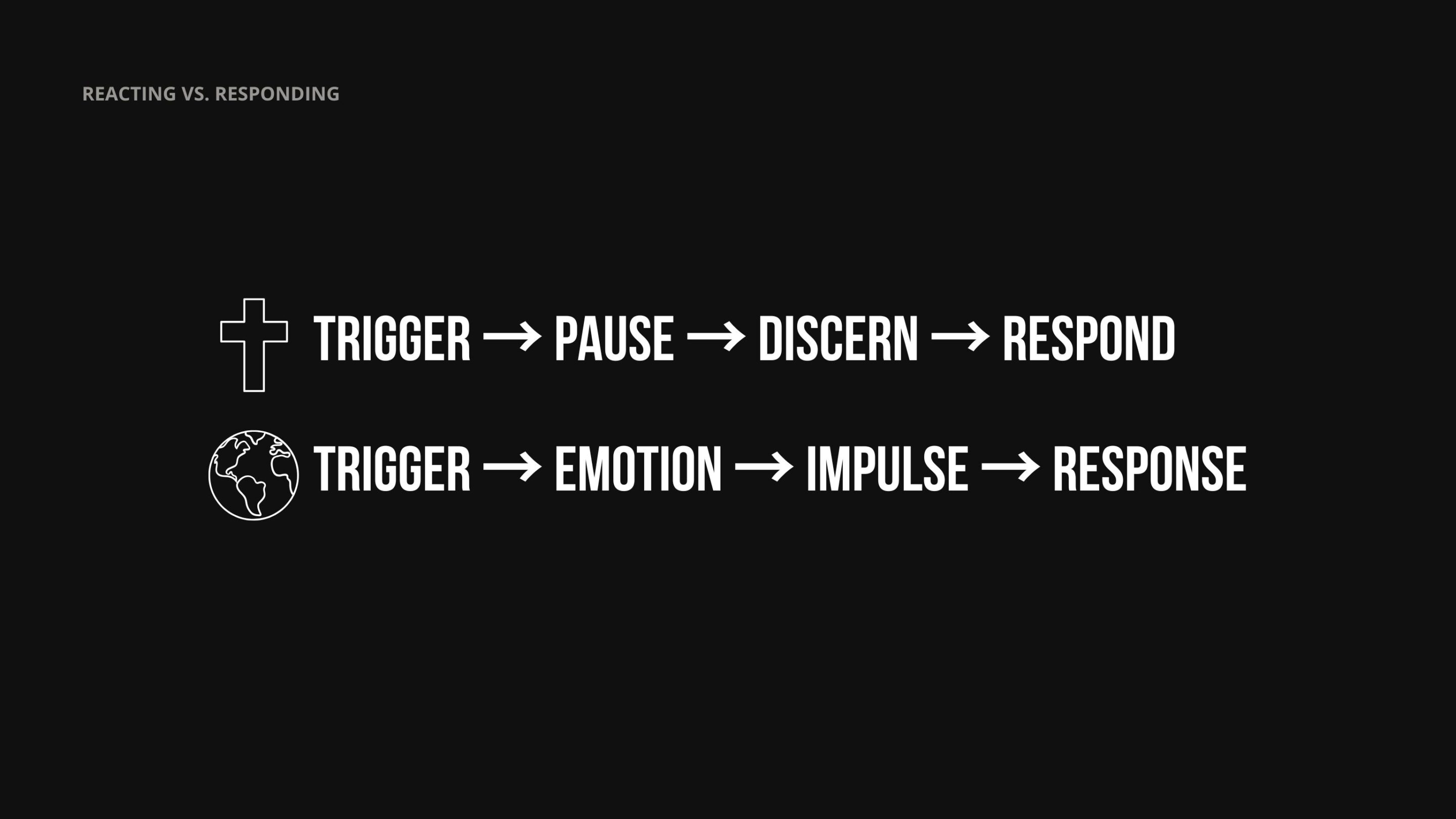
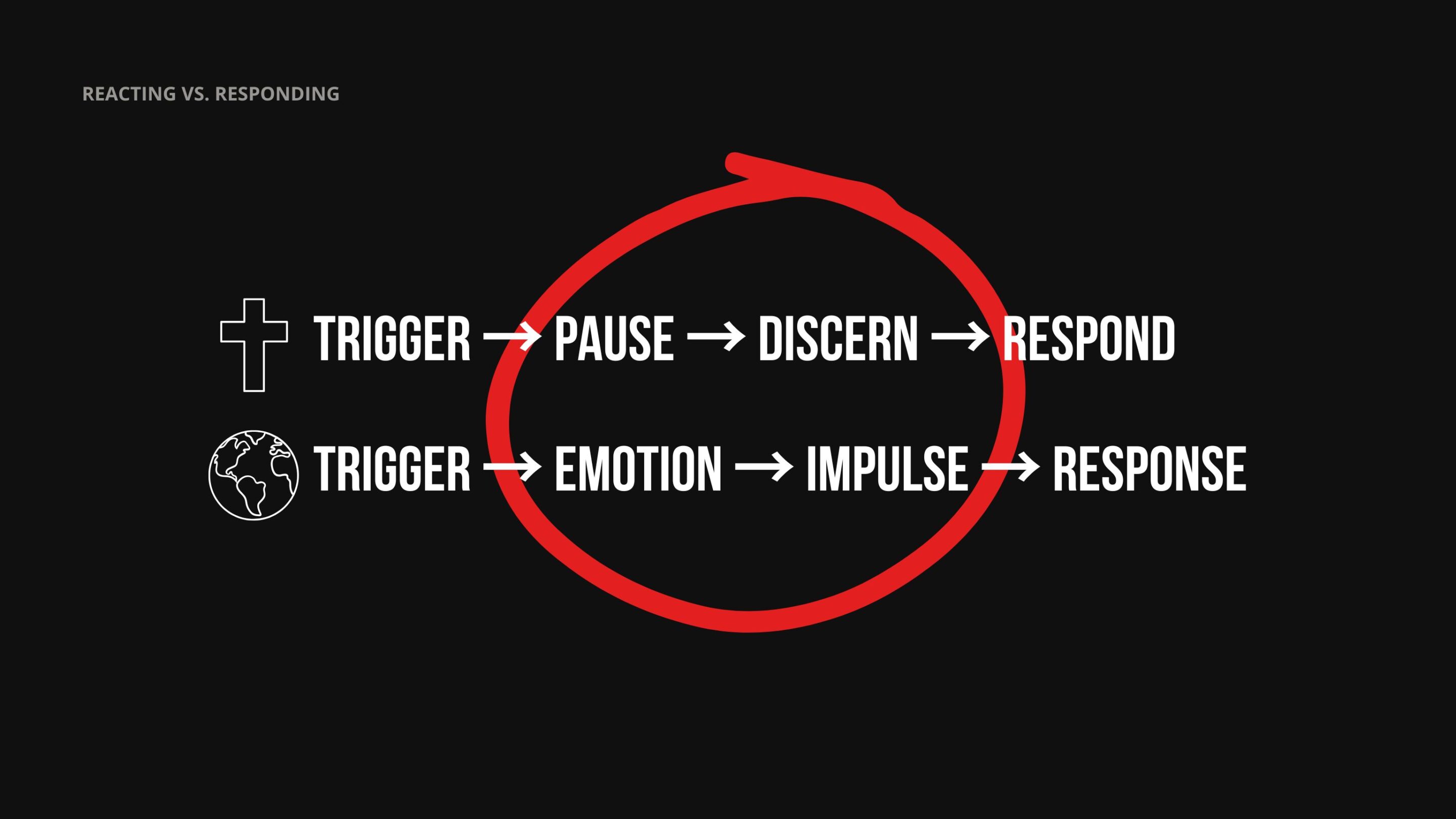
Imagine this sequence:
- A trigger leads to an emotion.
- The emotion creates an impulse.
- The impulse becomes a response.
Someone criticizes your leadership. You feel attacked, so you immediately defend yourself.
But we can interrupt that process.
Instead of moving directly from the trigger to the reaction, we can pause, discern, and choose our response.
Your first emotion doesn’t have to become your final response.
When someone confronts us aggressively, our nervous system can interpret the interaction as a threat. We may become defensive, angry, anxious, or withdrawn.
That’s why simply telling ourselves to calm down isn’t much of a strategy. We need a practical way to slow down.
|
The
Holy
Pause
|
The Holy Pause
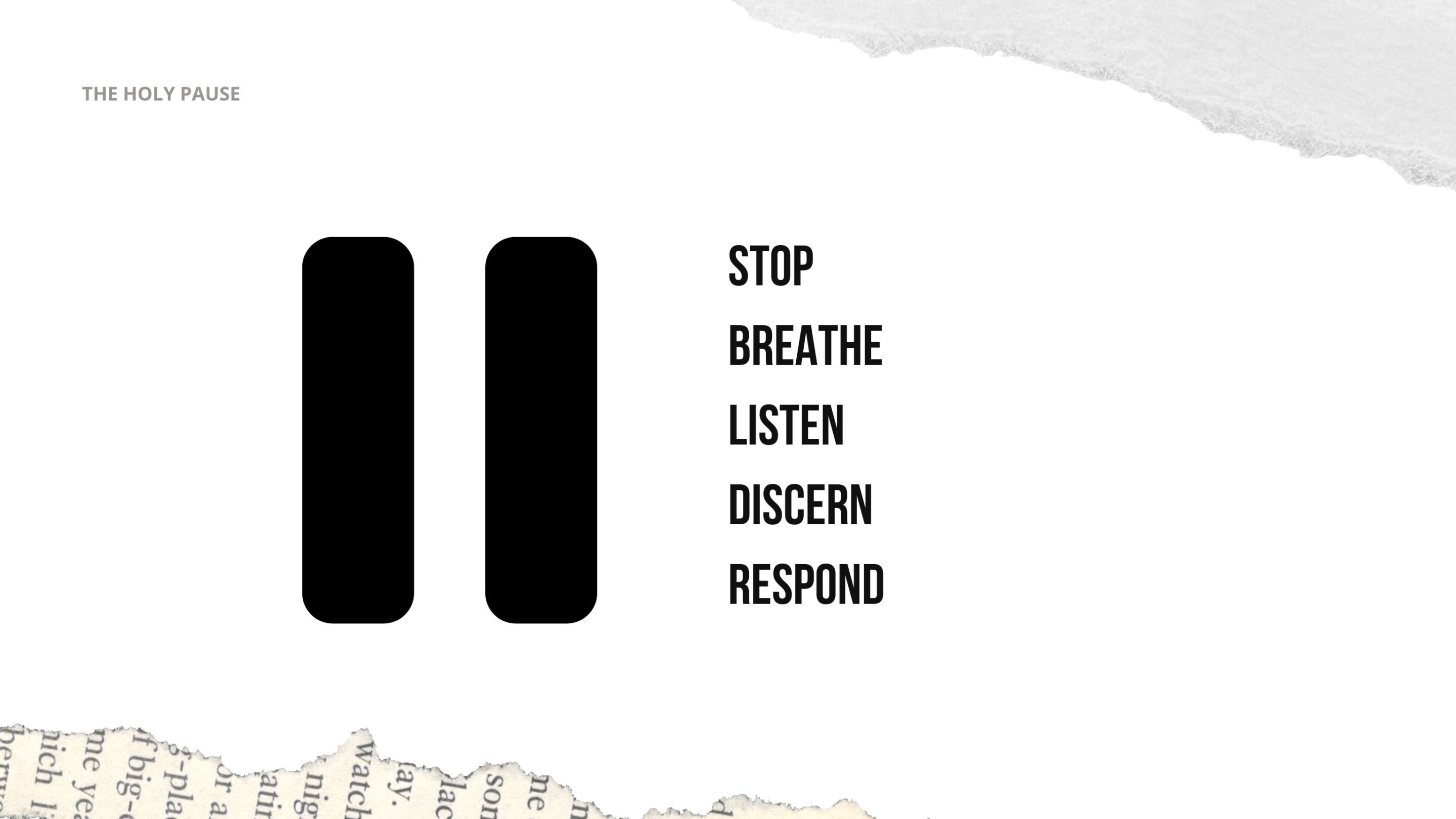
The Holy Pause has five steps.
- Stop. Don’t immediately defend yourself or react.
- Breathe. Slow yourself down and recognize what you’re feeling.
- Listen. Understand what the other person is actually saying. Listening doesn’t mean agreeing.
- Discern. Ask, “What part of this might be true? Am I defending the truth, or am I defending my ego?”
- Respond. Choose a response that honors Christ.
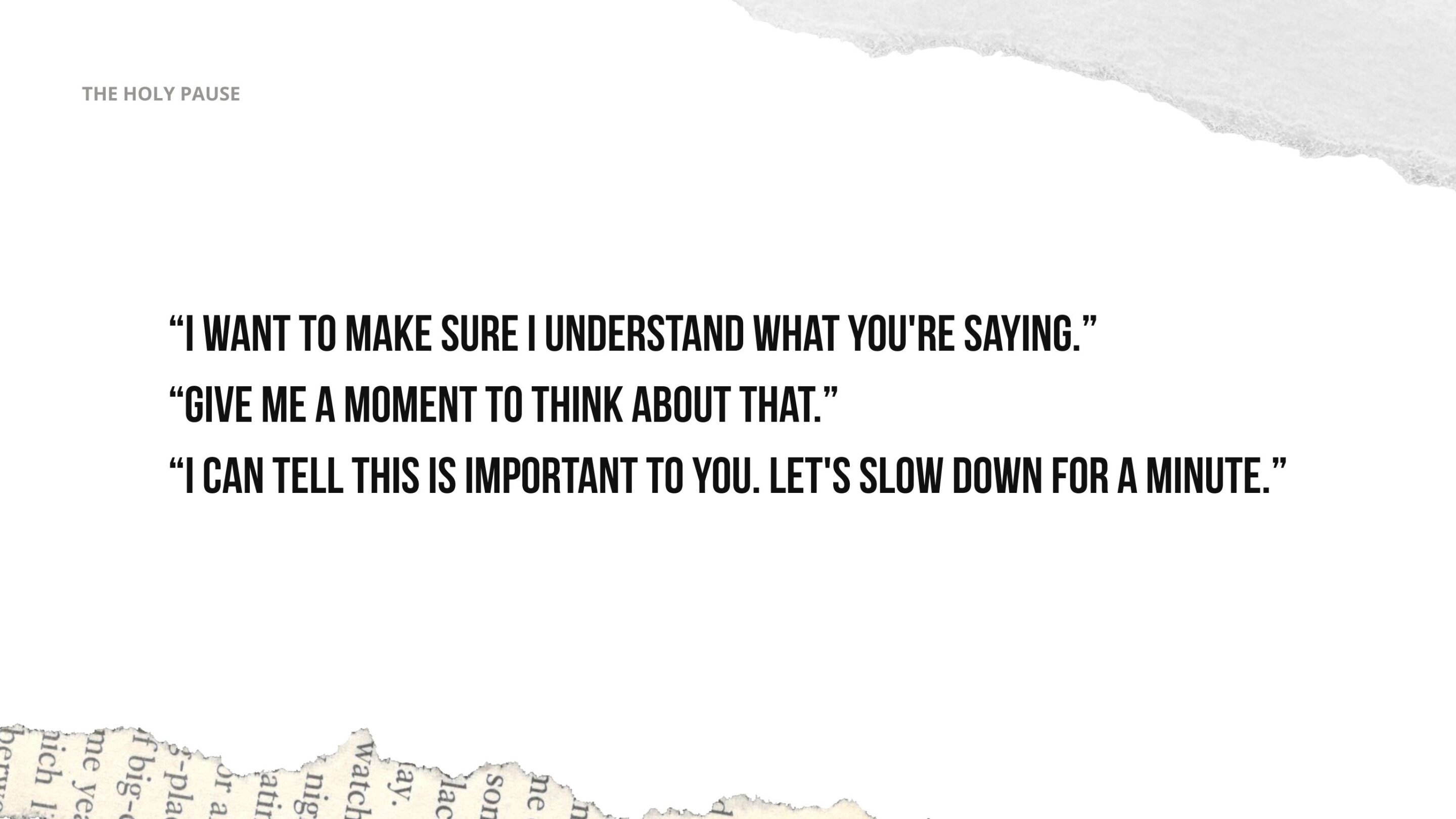
Here are three phrases you can use when you need a moment:
- “I want to make sure I understand what you’re saying.”
- “Give me a moment to think about that.”
- “I can tell this is important to you. Let’s slow down for a minute.”
Sometimes asking someone to explain their concern gives them an opportunity to hear their own words differently. It also gives you time to respond thoughtfully.
The pause is where wisdom gets a chance to enter the conversation.
Remember: I don’t have to control their emotions. I have to steward mine.
A Personal Reflection
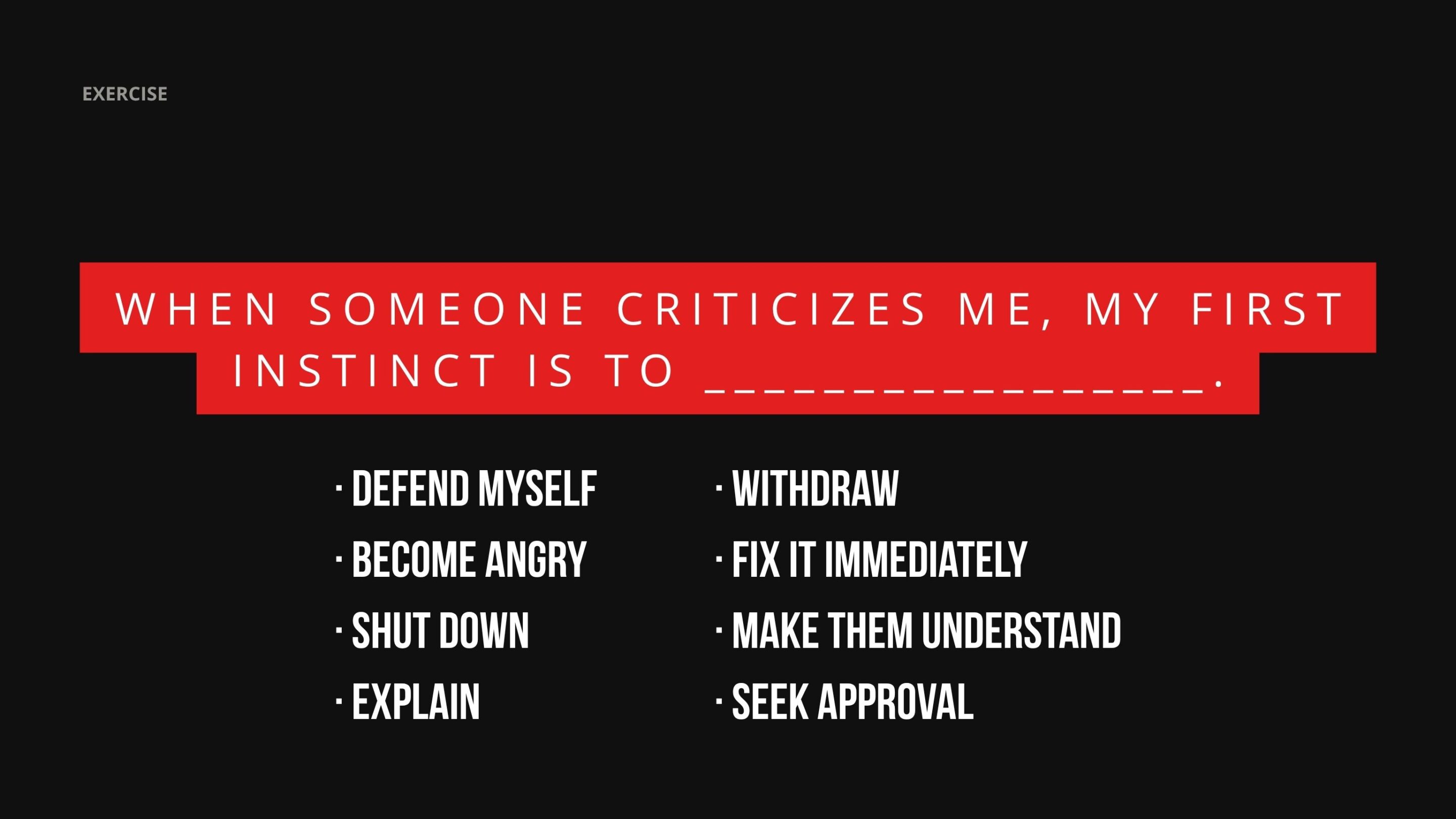
Complete this sentence:
“When someone criticizes me, my first instinct is to _____________”
Perhaps you defend yourself, become angry, shut down, explain everything, withdraw, fix the problem immediately, or seek approval.
Now ask yourself:
- What does that reaction reveal about what you’re afraid of?
- Are you afraid of being misunderstood, rejected, disrespected, or seen as incompetent?
Take a moment to reflect.
The purpose isn’t to condemn yourself. It’s to recognize your patterns so you can begin responding differently.
You cannot work on a pattern you refuse to acknowledge.
The next time someone criticizes you, ask not only, “What did they say?” but also, “Why did that affect me so deeply?”

Jesus Was Loving — But He Had Boundaries
This is the theological heart of our workshop.
Jesus was compassionate, but He was not controlled by other people’s expectations.
He listened, healed, forgave, confronted, and challenged people. Sometimes He walked away or withdrew.
Luke 5:16 says:
“But Jesus often withdrew to lonely places and prayed.”
Jesus had crowds, disciples, critics, and people who needed Him. Yet He still withdrew to pray.
He didn’t treat every demand as an obligation that had to be met immediately.
His compassion did not mean He was available to everyone at every moment.
Boundaries aren’t the opposite of love. Sometimes boundaries are what allow love to remain healthy.
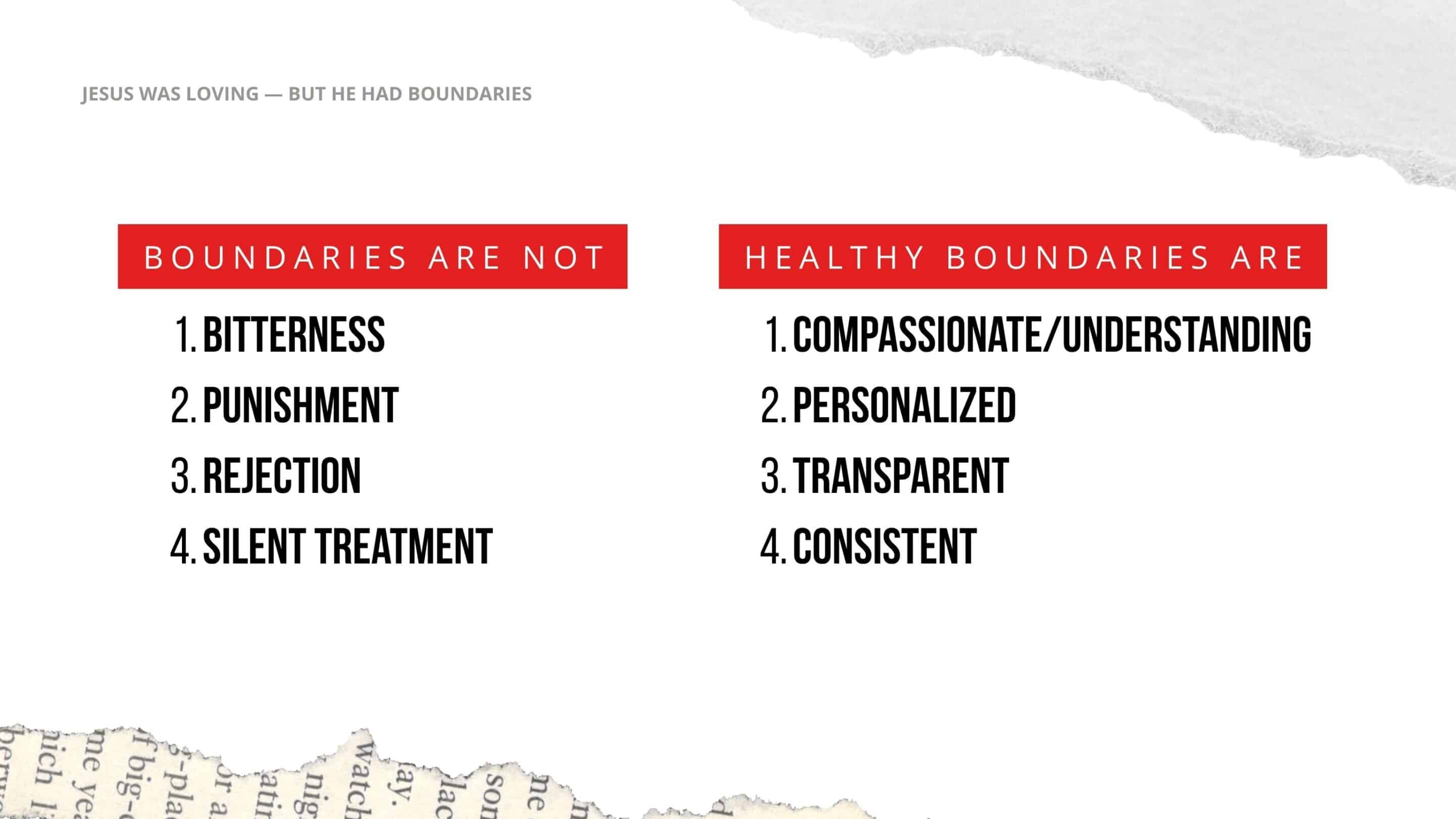
Let’s clarify what boundaries are not.
They are not bitterness, punishment, rejection, or the silent treatment.
Healthy boundaries are compassionate, personalized, transparent, and consistent.
They allow us to care about people while recognizing what is appropriate and what we can reasonably do.
Here’s a sentence worth remembering:
“I care about you, but I am also responsible for how I participate in this relationship.”
Consider four important distinctions:
- Grace does not mean enabling.
- Forgiveness does not automatically mean immediate trust.
- Kindness does not mean unlimited access.
- Leadership does not mean control.
You can forgive someone while allowing trust to be rebuilt over time.
You can be kind while saying no.
You can establish a boundary without becoming bitter.
And you can lead faithfully without controlling how everyone feels about your leadership.
Healthy boundaries don’t eliminate compassion. They help us practice compassion without losing the ability to lead wisely.

Responding to Difficult People
Not every difficult person needs the same response.
Sometimes people need to be heard. Sometimes they need us to take responsibility. Sometimes we need to acknowledge their concerns without surrendering our authority.
Let’s look at three common situations.
1: The Hurt Person
Sometimes people are angry because they’re hurting.
Their frustration may come from disappointment, misunderstanding, or feeling ignored.
That doesn’t make every reaction appropriate, but understanding the hurt underneath can help us respond effectively.
Our first response should often be to listen.
Say:
“Help me understand what happened.”
Don’t immediately defend yourself or try to fix everything. Give the person an opportunity to explain their perspective.
Listening doesn’t mean agreeing. It means being willing to understand before responding.
2: The Frustrated Person
Sometimes something genuinely went wrong.
Perhaps communication was poor, expectations were unclear, or someone was overlooked.
When that happens, own whatever belongs to you.
You might say:
“You’re right. We could have communicated that better.”
That sentence acknowledges a legitimate concern without requiring you to accept every accusation.
You can admit a mistake without accepting an unfair judgment about your character.
Humility is not a loss of authority. It’s an expression of integrity.
3: The Critic
Some people seem to find something wrong with everything.
How should we respond?
Acknowledge their concern without surrendering your authority.
Say:
“I hear your concern. Thank you for bringing it to me.”
You don’t have to debate every criticism or make every person agree with your leadership.
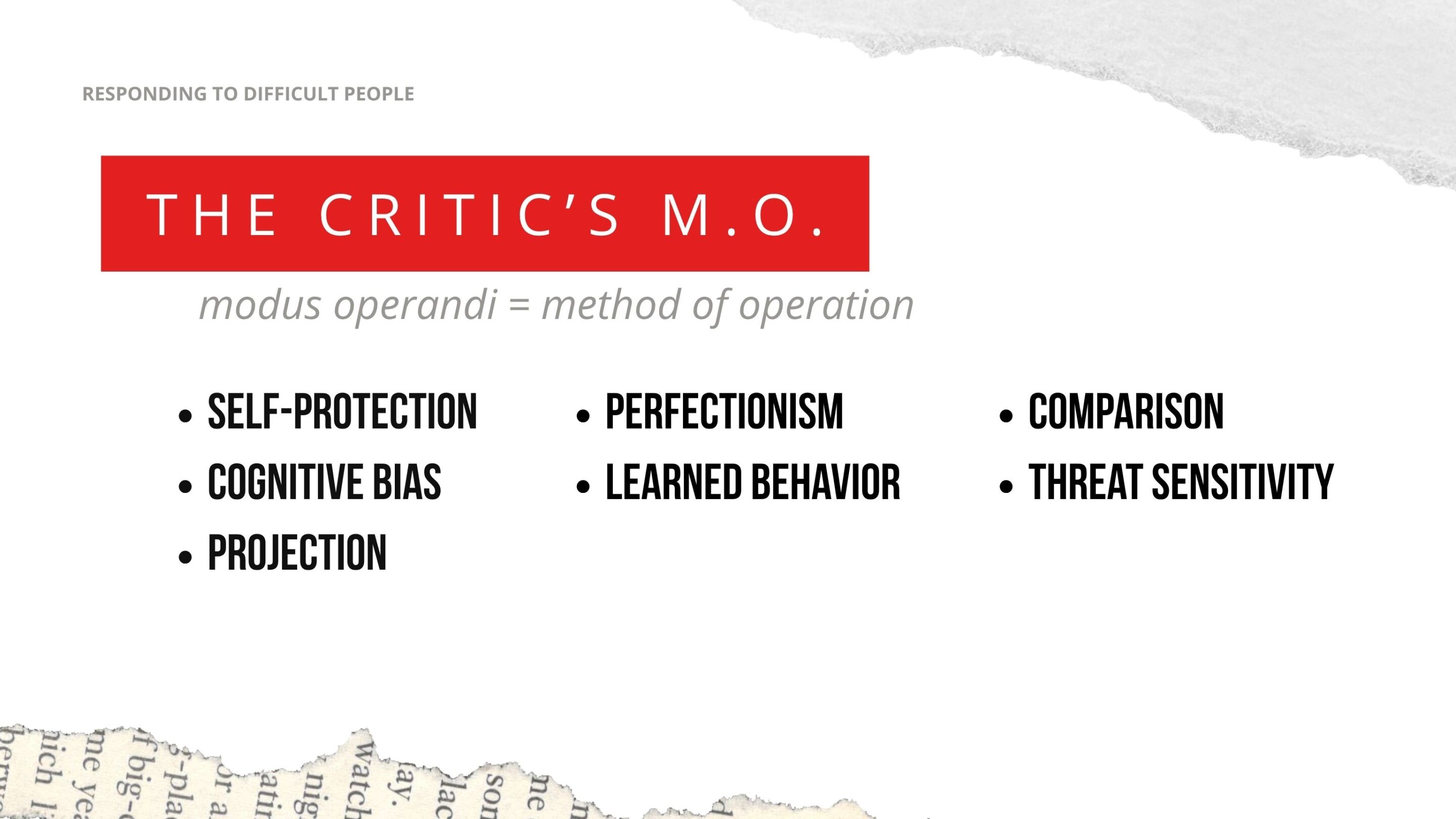
It’s also important to recognize that chronic criticism can have different causes.
Sometimes people criticize to protect themselves from feeling vulnerable. Sometimes perfectionism, learned behavior, comparison, stress, or insecurity contributes to their critical attitude.
Being highly critical doesn’t necessarily mean someone is confident. Chronic criticism can coexist with considerable insecurity.
We cannot know someone’s motives simply by observing their behavior, but understanding these possibilities can help us respond with compassion rather than taking every criticism personally.
At the same time, understanding behavior doesn’t mean accepting it without limits.
Remember this distinction:
Criticism says, “There is something wrong with this person.” Discernment says, “This behavior is harmful.”
We can identify harmful behavior without reducing someone to a negative label.
That allows us to remain compassionate without becoming passive.

How to Have the Hard Conversation
Sometimes a difficult situation requires a direct conversation.
One practical method is O-I-E-I: Observe, Impact, Expectation, and Invite.
1: Observe
Describe the specific behavior without attacking the person’s character.
Say:
“When you raised your voice at our volunteer…”
Avoid saying:
“You’re always disrespectful.”
The first statement identifies a behavior. The second labels the person.
Avoid absolute words such as “always” and “never.” They often shift the conversation away from the actual issue and toward an argument about whether your statement is fair.
Stick to what happened.
2: Impact
Explain the effect of the behavior.
“…it made it difficult for the conversation to continue.”
Or:
“When the schedule changed without enough notice, it left the volunteers unsure of what they were expected to do.”
Focus on the consequences rather than assuming the person’s motives.
3: Expectation
Clearly communicate what needs to happen moving forward.
“We need concerns to be communicated respectfully.”
Or:
“When a schedule changes, we need to notify the people affected as soon as possible.”
People cannot consistently meet expectations they don’t understand.
4: Invite
Invite the person into a constructive next step.
“I’m happy to talk through the issue with you. How can we handle this differently?”
Let’s put it all together:
“When you raised your voice at our volunteer, it made it difficult for the conversation to continue. We need concerns to be communicated respectfully. I’m happy to talk through the issue with you. How can we handle this differently?”
That is Observe, Impact, Expectation, and Invite.
You identify the behavior, explain the impact, establish the expectation, and invite the person to work toward a better outcome.
Compassion plus clarity plus boundaries.
You cannot control whether someone responds positively, but you can control whether you communicate respectfully and consistently.
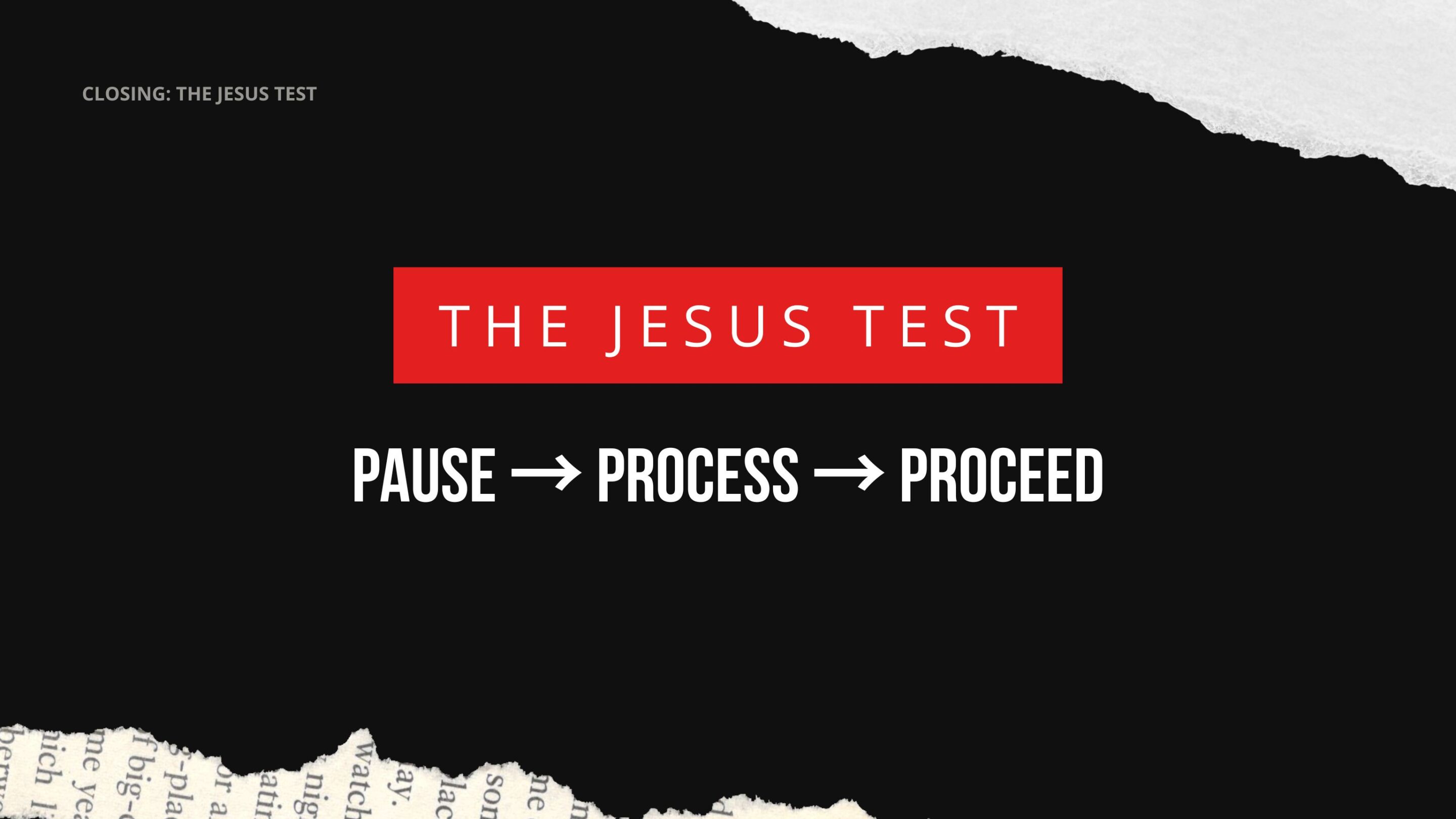
The Jesus Test
As we close, I want to give you a simple framework to remember during difficult interactions:
Pause. Process. Proceed.
Pause
Don’t let another person’s emotions dictate your own.
If someone is angry, you don’t have to become angry. If someone is defensive, you don’t have to become defensive.
Breathe, listen, and give yourself time to think.
Process
Ask yourself three questions:
What happened?
What am I feeling?
What is actually true?
Separate the person’s words from your interpretation. Consider whether you need to acknowledge something, clarify something, establish a boundary, or release the offense.
Proceed
Choose a response that is loving, wise, biblical, and appropriate.
Sometimes that means listening. Sometimes it means apologizing. Sometimes it means establishing a boundary or walking away from an unproductive argument.
The goal isn’t to control the other person. The goal is to respond faithfully.
This brings us to the fruit of the Spirit.
Galatians 5:19–23 contrasts the acts of the flesh, including hatred, discord, jealousy, fits of rage, and dissensions, with the fruit of the Spirit:
“But the fruit of the Spirit is love, joy, peace, forbearance, kindness, goodness, faithfulness, gentleness and self-control. Against such things there is no law.”
Think about those qualities during a difficult conversation.
- Love recognizes the other person’s dignity.
- Peace helps us avoid unnecessary conflict.
- Forbearance reminds us to practice patience.
- Kindness keeps us from humiliating others.
- Gentleness allows us to be firm without becoming cruel.
- And self-control keeps our emotions from dictating our behavior.
We may not be able to prevent every difficult interaction, but we can grow in how we respond.
That is the Jesus test: not simply knowing what Jesus would do, but allowing His character to shape our actions when we’re under pressure.
A Final Note
Think again about the difficult interactions you considered at the beginning of this workshop.
What might you do differently the next time a similar situation occurs?
Perhaps you’ll pause before responding, ask a question instead of defending yourself, acknowledge a mistake, or establish a boundary you’ve been avoiding.
Perhaps you’ll recognize that someone’s opinion doesn’t determine your identity.
Or perhaps you’ll realize that an offense is something you can release rather than carry into the next conversation.
Ministry will put you in rooms with people who love you, people who misunderstand you, people who challenge you, people who need you, and sometimes people who are simply difficult.
You cannot control what they bring into the room.
But you can control what you bring back into it.
You don’t have to absorb their anger.
You don’t have to carry their opinion.
You don’t have to win every argument or answer every accusation.
But you do have an opportunity to demonstrate what Jesus looks like when pressure comes.
You can respond with patience instead of impulsiveness, humility instead of defensiveness, and compassion without enabling harmful behavior.
The goal isn’t simply to become better at dealing with difficult people.
The goal is to become more like Jesus when difficult people show up.
So the next time someone says something that stings, remember the Holy Pause: stop, breathe, listen, discern, and respond.
And if you need a shorter reminder, remember these three words:
Pause. Process. Proceed.
Allow the Holy Spirit to shape your response, and let difficult interactions become opportunities to demonstrate the character of Christ.
My prayer is that your next difficult conversation becomes an opportunity not simply to manage another person’s behavior, but to reflect Jesus in your own.
You cannot control what someone brings into the room. But through the Holy Spirit, you can choose what you bring back into it.
That is how we respond to hard people with holy responses.